The Grid Runs on Trust Before It Runs on Power
- Tommy Forsberg
- Mar 2
- 4 min read

A lit room feels ordinary.
That may be one of the most dangerous illusions of modern life.
You flip a switch, and the room answers. The kettle boils. The refrigerator hums. The router blinks. A city glows after dark and gives the impression that all of this is stable, settled, almost permanent. Electricity arrives so reliably, most of the time, that it begins to feel less like a system and more like a fact of nature.
But it is nothing of the sort.
The grid is not a single machine. It is not one station, one cable, or one switch somewhere far away. It is a chain of generation, transmission, timing, maintenance, replacement, coordination, and trust. It works so smoothly that it disappears from thought. And once something disappears from thought, it begins to look invincible.
That is what interests me.
Not only what happens when the lights go out, but what those lights were really resting on all along.
A great deal of modern life depends on things most people never see. Not because they are secret, but because they are distant. Critical equipment no town can build for itself. Specialized manufacturing spread across borders and oceans. Maintenance schedules. Warning systems. Skilled operators. Replacement parts with long lead times.
The ordinary person does not need to think about these things for the system to work.
That is its strength.
It is also its quiet danger.
Because a civilization can become powerful in ways that make it less resilient. It can become so efficient, so layered, and so dependent on continuity that it forgets the cost of interruption. It can mistake smooth function for permanence.
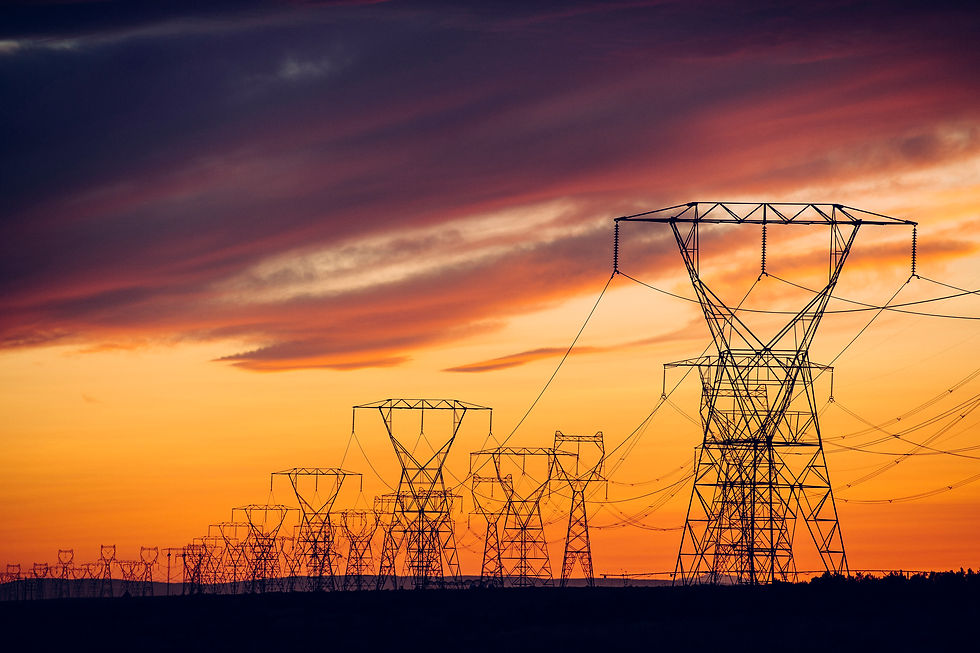
The modern grid is a good example. It is vast, redundant in places, and supported by serious technical expertise. But it also relies on certain pieces of infrastructure that are difficult, expensive, and slow to replace if they are badly damaged. Some of the largest and most important transformers in the system are not something a city workshop can recreate, or a region can quickly substitute. They belong to a world of heavy industry, long logistics, and technical specialization. If enough of those links are strained at once, the problem is no longer only electrical. It becomes industrial, logistical, and human.
That is the part people tend not to imagine.
We are used to thinking of failure as a dramatic event. A storm. An explosion. A cyberattack. A sudden break. But real fragility often lives somewhere quieter. In long supply chains. In imported components. In aging infrastructure. In the assumption that warnings will arrive in time, parts will keep moving, expertise will remain available, and institutions will still be coherent enough to coordinate under stress.
Most of the time, those assumptions hold.
Modern life depends on that phrase more than we like to admit.
Because the modern world does not only run on infrastructure. It runs on continuity. It runs on the belief that tomorrow will resemble today closely enough for the chain to keep moving. Fuel will still arrive. Manufacturers will still produce. Ships will still sail. Roads will still carry loads. Control rooms will still be staffed. The invisible choreography will continue.
When it does, the result feels effortless.
When it does not, we discover how much of normal life was being held together by systems few people ever needed to understand.
That is why hidden dependence matters. It reveals something larger than engineering. It reveals a civilizational habit of mind. We have grown used to power without proximity. We depend on systems we do not repair, components we do not make, and forms of technical continuity that very few people could rebuild locally if they were truly broken.
In that sense, the light switch hides more than a wire.
It hides distance.
It hides specialization.
It hides vulnerability.
And perhaps most of all, it hides imbalance.
Because balance is not only a moral idea. It is a practical one. A society loses balance when it becomes more interested in scale than resilience, more interested in efficiency than recoverability, more interested in seamless performance than in the ability to endure interruption. We tend to admire what is large, fast, optimized, and invisible in operation. We are less good at admiring what can be repaired, replaced, understood, and held together under strain.
Yet those quieter qualities are often the ones that matter most when systems are tested.
That is one of the deeper questions behind Solstorm.
Not just what collapses, but what modern people forgot to value while things were still working.
A city at night still has a strange beauty to it. Windows lit against the dark. Roads glowing. Homes warm behind their walls. It looks like certainty made visible. But another truth sits inside that beauty. Every lighted room depends on a chain of continuity far longer than most of us ever have reason to imagine.
The miracle is not only that it works.
The miracle is how much has to keep working, in sequence, often across great distance, for it to remain ordinary.
And perhaps that is the more unsettling thought.
Not that the lights could go out.
But that while they are still on, they can hide how much of the world beneath them has already forgotten the meaning of balance.