Why the Sea Becomes a Road After Collapse

Maritime Survival After Collapse: Why Boats Matter in Northern Norway

When people imagine a modern society failing, they usually picture roads first.
Cars abandoned on highways. Fuel stations empty. Bridges blocked. Towns cut off because trucks no longer arrive.
That makes sense in most of the modern world. We have built our lives around roads.
But along the coast of Northern Norway, there is another way of looking at distance.
The sea is not only something between places. It is a road.
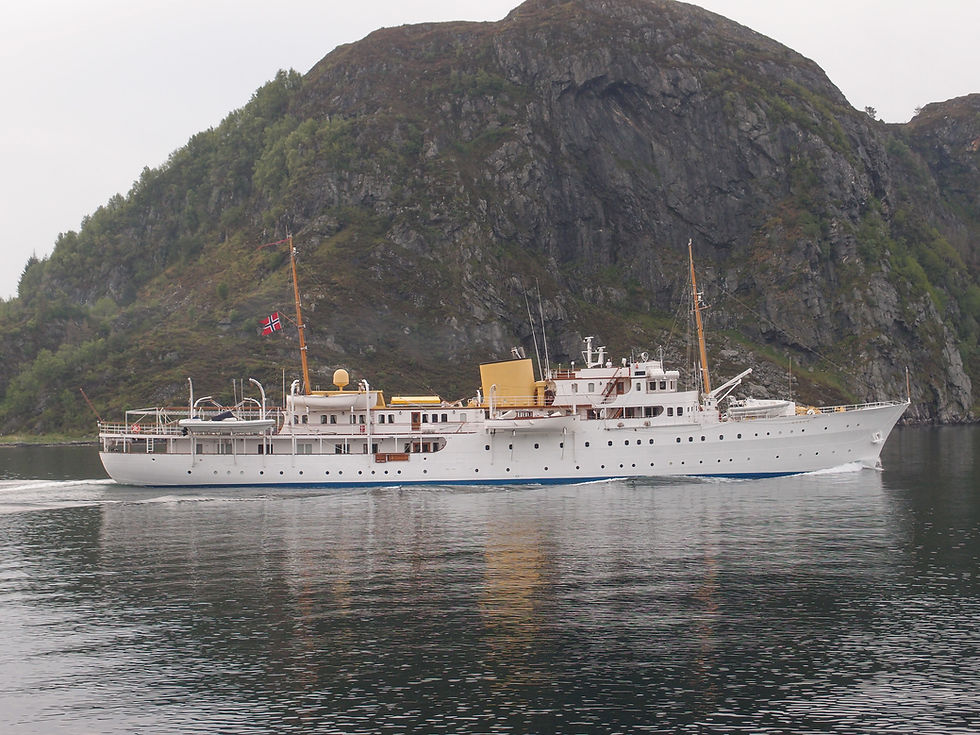
For generations, boats connected farms, fishing grounds, islands and settlements long before many of those places had reliable road connections. Even today, much of coastal Norway makes more sense when viewed from the water than from a map of highways.
That changes what survival looks like after a major infrastructure collapse, and it shapes much of The Solstorm Saga.
When roads stop working
A road depends on more than asphalt.
It depends on fuel distribution, snow clearing, bridges, tunnels, ferries, spare parts, traffic control and people maintaining all of it.
Remove enough of those systems and a perfectly good road can become useless surprisingly quickly.
The same is true of the sea, of course. Boats need fuel. Engines need maintenance. Navigation systems can fail. Harbors require infrastructure.
But the sea itself does not need maintenance.
No one has to plow it.
No bridge has to remain standing.
No landslide has to be cleared before a boat can pass.
For a coastal community with working boats and people who know how to use them, that changes the geography of a collapse.
An island that looks isolated on a road map may be connected to half a dozen communities by water.
A mainland settlement with one damaged bridge may be the truly isolated place.
That reversal is something I wanted to explore in SOLSTORM.
A boat is only as useful as the person aboard it
There is a tendency in survival fiction to treat equipment as capability.
Have the right rifle, vehicle, generator, boat or radio and you have solved the problem.
Real life is less forgiving.
A boat is extraordinarily useful if someone aboard understands weather, navigation, loading, anchoring, engines, tides, cold water and the behavior of the vessel itself.
Without that knowledge, it can become dangerous very quickly.
I have spent many years of my life at sea. A calm harbor can make people overestimate what they know. The difference becomes obvious when the weather turns or something aboard stops working.
In a post-collapse setting, that difference becomes larger because the systems we normally rely on may no longer be there to catch mistakes.
There may be no rescue boat or helicopter coming. No mechanic waiting at the next harbor.
No weather app updating every hour.
No marina with fuel, batteries and spare parts.
The boat still works. The world around it has changed.
What happens when GPS stops answering?
Modern electronic navigation is extraordinarily good.
It is also easy to become dependent on.
A working chartplotter can tell you where you are within meters. Electronic charts show rocks, depth, routes and hazards. Weather information can arrive continuously. Radios connect vessels with one another and with stations ashore.
Now remove that.
Not forever, necessarily. Just long enough.
A navigator who knows how to use paper charts, compass bearings, landmarks, depth, speed and time can still move.
Someone who has only ever followed the little boat symbol on a screen has a different problem.
After infrastructure failure, that gap in experience matters much more.
Technology does not become useless because society collapses. Much of it continues working for a while.
The question is what happens when it fails one piece at a time.
That is one reason a solar storm interested me as the beginning of SOLSTORM. The danger is not simply electricity disappearing. It is the sudden loss of systems people stopped noticing because those systems worked so reliably.
Navigation is one of them.
Fuel changes everything
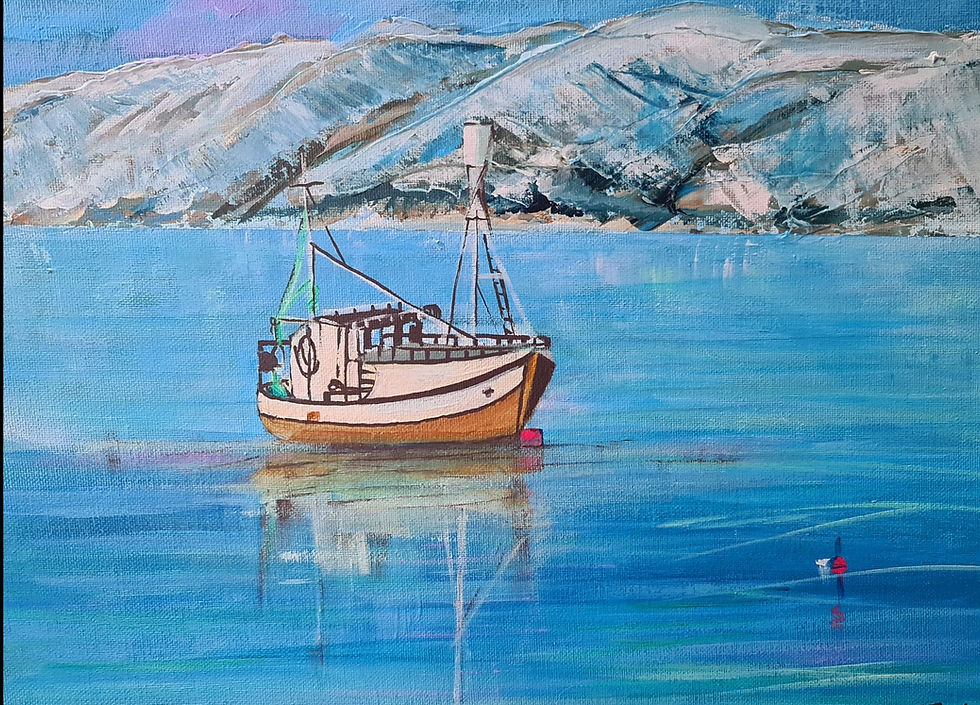
In the first days or weeks after a collapse, a good motorboat could be one of the most valuable things a coastal community owns.
It can move people quickly.
Carry supplies.
Reach fishing grounds.
Tow another vessel.
Move medicine between settlements.
But fuel is finite.
That creates an interesting progression.
At first, the fastest boat may be the most valuable.
Later, the most useful boat may be the one people can continue operating.
A simple diesel fishing boat with accessible machinery may outlast something more sophisticated.
A rowboat requires muscle, not fuel.
And a sailing vessel begins to look very different when fuel can no longer be assumed.
Sailing is inefficient by modern commercial standards for many tasks. That is why engines replaced sail.
But when the fuel supply disappears, the equation changes.
The wind is still there.
That does not make sailing easy, but a seaworthy sailboat can keep moving long after the diesel supply has become a problem.
The sea carries more than people
After the first emergency passes, the most important use of boats may no longer be escape. They become a way of keeping settlements connected.
A functioning community needs more than food.
One settlement may have a medic.
Another may have tools.
Another may have seed grain.
Another may have livestock.
Another may have someone who knows how to repair engines.
Someone else may have salt, nets, antibiotics, batteries or information.
That is where maritime survival becomes something larger than individual survival.
Boats allow communities to exchange what they have.
They create trade.
They move knowledge.
They carry news.
They allow people to help one another without every settlement having to possess every skill.
This is also where post-collapse fiction becomes more interesting to me than the familiar lone-survivor story.
Surviving the first weeks is one problem. Building something that can survive the next generation is another.
Islands are not necessarily refuges
Islands often appear in survival stories because they offer separation.
Water creates a barrier.
That can make an island easier to defend.
But that is only half the picture.
An island with a useful harbor can also become a node.
People can arrive there.
Boats can leave from it.
Trade can pass through it.
Information can spread from it.
That is much closer to how I think about Skjoldheim.
It is not meant to be a bunker where survivors hide from the world.
It is a place that gradually becomes connected to the world around it.
The sea makes that possible.
That changes the story from one about keeping everyone out to one about deciding whom to trust, what to share, what to defend and what kind of community should grow from what remains.
Northern Norway changes the usual survival equation
Northern Norway is difficult country.
Winters are long.
Weather can turn quickly.
Agriculture is limited compared with more temperate regions.
Distances are large.
Cold water kills quickly.
But the same geography also offers resources and forms of resilience that look different from those found farther south.
Fish.
Small farms.
Fresh water.
Boats.
Protected coastal routes.
Communities accustomed to weather and distance.
Practical knowledge that still matters when technology is unavailable.
That combination is one reason I chose this region for a realistic Nordic post-collapse story.
Why the sea matters in SOLSTORM
The sea in The Solstorm Saga is not there simply as scenery. It carries people, food and trade. It separates communities and connects them. It can provide a way out, and it can kill very quickly when someone gets it wrong. In The Sky Went Wrong, several lives that begin far apart are drawn toward the same remote Norwegian island after the modern world starts failing.
Some arrive by sea because there is no other practical route.
Others survive because somebody aboard still knows what to do when the electronics stop helping.
As the saga grows, that maritime geography becomes increasingly important.
The communities that survive are not necessarily the ones that can isolate themselves most completely.
They may be the ones that can still reach one another.
The Sky Went Wrong is the first book in The Solstorm Saga, a Nordic post-collapse series grounded in Northern Norway, seamanship, practical survival and the difficult work of rebuilding after modern systems fail.
A few practical questions
Would boats still work after a solar storm?
Many would. A solar storm would not magically destroy every boat or engine. The larger problems would be electrical damage, communications, navigation systems, fuel supply and the infrastructure needed to repair and support vessels.
Could sailboats be useful after a grid collapse?
Yes. Their greatest advantage would be the ability to travel without fuel. Their usefulness would still depend heavily on seaworthiness, maintenance and skilled crews.
How would people navigate without GPS?
Paper charts, magnetic compass, visual bearings, depth information, estimated speed and time, and knowledge of the coast remain effective. The difficulty is that many modern sailors rarely need to depend on them anymore.
Would an island be safer after infrastructure failure?
Sometimes. Water can create a defensive barrier, but islands also depend on transport. An island with boats, food production and access to surrounding communities could be in a very different position from one that depended entirely on mainland supplies.
Why is maritime knowledge valuable after collapse?
Because coastal transport could remain possible even when roads, bridges, fuel distribution and communication networks are badly damaged. In places such as Northern Norway, knowing how to move safely by sea could mean access to food, medicine, trade and other communities.